💬 Famous Quotes
📋 Basic Information
📖 Biography
From Atheism to Her Knees
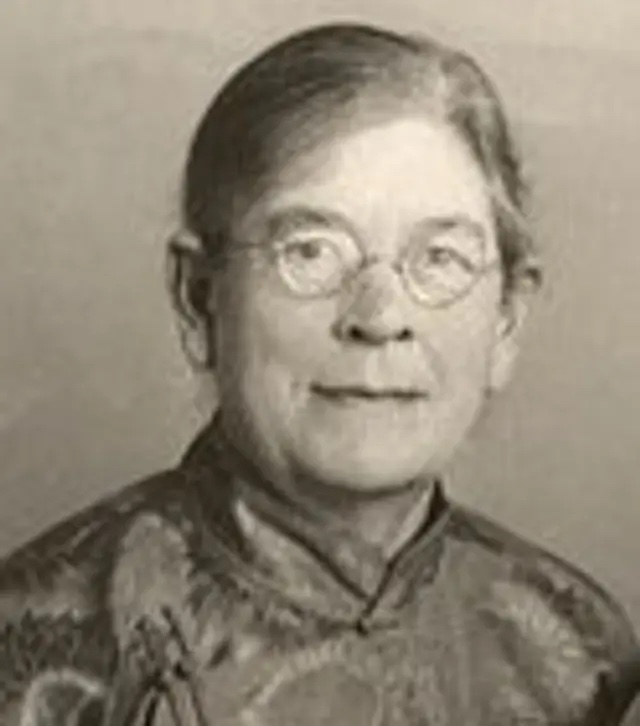
Evangeline French (冯贵珠) was born in Algeria in 1869 to British parents, the eldest daughter. From childhood she was energetic, headstrong and adventurous. After the family moved to Geneva, Switzerland, she attended secondary school there; after graduating she returned to England with her parents but found it hard to adapt to the rigid English society. In those years she was drawn to rationalism, nihilism and anarchism, and also measured God by reason. At university she threw herself into left-wing movements, and her inner conflict grew more intense: she could not deny God's existence and commandments, yet her temper became irritable and bitter, and for a time she stopped going to church. One day, in a mental breakdown, she even uttered blasphemy, and it was her sister Francesca French (冯贵石) who checked her in time. Later she came to herself in repentance; when she stepped into church again, she knelt at the feet of Jesus and asked forgiveness for her past rebellion.
Escape from Death in the Boxer Year
After her life was changed she taught Sunday school and took up work in the slums, and gradually became clear that God was calling her to China. In 1890 she joined the China Inland Mission, and after training she went to Shanxi in 1893. When the Boxer Uprising broke out in 1900, Shanxi was among the worst-hit provinces, and large numbers of Western missionaries were killed. For a time nothing was heard of her, and the press listed her among the martyrs, a torment to her mother and sister at home. In fact many of her co-workers and close friends were indeed martyred; she and a party of missionaries escaped to Hankou through great hardship and survived, but fear and trauma forced her to return to England to recover. When asked whether she would go back to China, she could not answer at first. But whenever she remembered the Chinese believers who had risked their lives to help her during the upheaval, she felt she owed a debt to the Chinese church, and so she resolved to return to Shanxi to "repay the debt."
The Girls' School at Huozhou
At this point Alice Mildred Cable (盖群英) appeared. When the Boxer Uprising broke out, Cable was about to leave for China with her fiancé. When the terrible news came, he changed his mind and gave her two choices: stay in England and marry, or go to China alone. In great anguish she finally broke off the engagement and set out by herself. In 1901 the China Inland Mission placed her in Shanxi to work with Evangeline French, and from then on the two were lifelong co-workers. In 1902 they went together to Huozhou to bring the gospel to uneducated women secluded in their inner chambers. But they were not content with this, and discussed again and again what the Chinese church most lacked at that moment; the answer was educated Christian women. In 1904 they opened a girls' school in Huozhou. The first intake was 24, and in less than a year it grew to more than 70 girls and married women. The curriculum included literacy, the faith, science and the Chinese classics; during the busy farming seasons the school closed so that students could go home to help. They also paid attention to the customs of foot-binding and female infanticide, and encouraged the students to think about their own lives and the world around them.
The Trio of the Gobi
In 1908 the sisters' mother died, and Francesca French was left alone in England. That year Evangeline French and Mildred Cable returned to England on furlough. Francesca saw that her sister and Cable were as close as sisters and that their work was fruitful, and she envied them; Cable sensed what was in her heart and invited her to come along. From then on the three supported one another along the long roads of northwest China and were called the China Inland Mission's "Trio" (The Trio). None of them ever married; they lived, evangelized and worked together into old age. From 1923 they shifted their focus from Shanxi to the Silk Road, with Jiuquan as their base, preaching and running schools along the way in Zhangye, Dunhuang, Hami, Turpan and Ürümqi. They traveled by mule cart at night to avoid the heat, stayed in rough inns, and sat around courtyard fires eating and talking with travelers from every direction. In Hui Muslim areas they strictly observed Muslim dietary prohibitions to reduce needless barriers, and they could also visit the women of officials' households, something male missionaries could not do.
Fourteen Years in the Desert
Their journeys were repeatedly dangerous. In 1931 the Muslim general Ma Zhongying (马仲英) occupied Dunhuang and summoned them to his camp eighty miles away, demanding medicine and requiring them to treat his wounds every day. The three feared being held as hostages, and once he had recovered they asked permission to return to Dunhuang. In April of the following year they pretended to be setting out on a long journey, arranged their lodgings to look occupied, and, taking advantage of a day off for the guards, escaped into the desert, reaching Ürümqi on the dry rations they carried. In Jiuquan they also rescued an abandoned deaf-mute girl, "Gua Gua" (寡寡). The girl had once run after their mule cart until she could go no farther, and after that she stayed at the city gate every day, weeping and praying. A year later the three returned to Jiuquan, found her and adopted her, naming her Ailian (爱莲). They taught her to lip-read, to read and write, and to know Jesus, and took her with them on their travels. From 1923 until they were forced to leave China in 1936, over fourteen years, they traveled the Silk Road five times and were the first Western women to cross the Gobi Desert. After returning to Britain they became legendary figures, and in 1943 she, Mildred Cable and Francesca French were jointly awarded the Livingstone Medal of the Royal Scottish Geographical Society. In July 1960 Evangeline French died in England, aged ninety-one.