💬 Famous Quotes
📋 Basic Information
📖 Biography
A Meeting at Nine
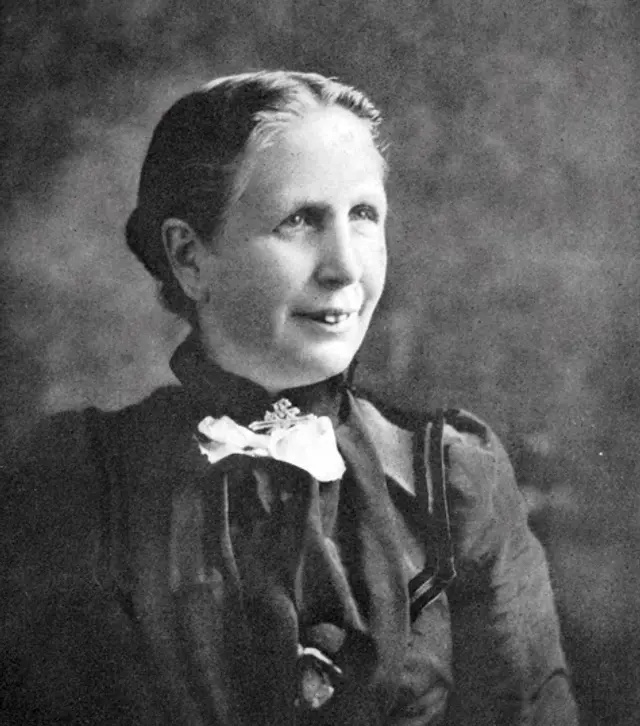
Jennie Faulding Taylor (福珍妮), born Jane Elizabeth "Jennie" Faulding in London in 1843, was the daughter of William Faulding, a maker of piano parts who had known Hudson Taylor (戴德生) as a friend before Taylor went to China, and who was one of the earliest supporters of the China Inland Mission. Jennie first met Hudson Taylor when she was nine, when he told her stories. Years later, when Taylor first returned to England on furlough from China, Mr. Faulding brought his nineteen-year-old daughter with him to call and give a donation; after that Jennie often came to help with odd jobs, and she gradually became a regular at the Saturday prayer meeting. She talked with her close friend Emily Blatchley (白安美) about her wish to go to China as a missionary. Her parents at first wanted her to wait a while, but her church's pastor, Landels (蓝德尔斯), took her side.
A Young Woman on the Lammermuir
Taking unmarried young women to distant China was, at the time, a convention that Hudson Taylor deliberately set out to break. His reasons were practical: young people learn languages quickly; women were urgently needed to bring the gospel to Chinese women; and his wife Maria's experience and character were enough to shepherd them. In May 1866 Jennie set out with the first party on the Lammermuir. On the day they sailed she wrote in her diary that she had borrowed the captain's telescope and kept watching her father's figure on the shore until he disappeared behind the houses, and then went back to her cabin and cried herself to sleep. After arriving in China she started a girls' school in Hangzhou, teaching Chinese girls to read and write. One of her students was later baptized and went to teach in Hangzhou, and married the daughter of the Chinese pastor Wang Laijun (王来君); in the end that student succeeded Pastor Wang as pastor of the whole Hangzhou district.
Marriage
In 1870 Maria died in Zhenjiang. A little over a year later Hudson Taylor proposed to Jennie. Her parents at first asked them to wait a year, but the two finally persuaded them to let it be sooner, and they were married on November 28, 1871. This marriage did not replace the earlier one: Jennie had loved Maria from the start, and the two of them often talked about her. For the next thirty-three years she was wife and mother, and also administrative assistant, co-worker and editor. She cared for the four children left by Taylor's first wife, had two of her own (Ernest and Amy), and also adopted an orphaned girl of the China Inland Mission.
Famine Relief in Shanxi
In 1876 the Great North China Famine (the Dingwu Famine) broke out; it lasted until 1879, and the dead numbered in the millions. Hudson Taylor raised funds and told his workers to take in more children, but it was still far from enough. On the advice of Timothy Richard (李提摩太), he made a decision that was quite unusual at the time: to send Jennie, with two China Inland Mission women missionaries, deep into the famine area. The reason was very practical: only if women took in the orphans would there be no rumours that the children were being carried off to be killed. In November 1878 she arrived in Taiyuan and soon opened an "industrial school" that took in orphans. This was the core of the China Inland Mission's famine relief work, and the period of her life in which she most stood on her own.
The Last Years
In 1881 both their mothers died, one after the other, and Jennie went back to England for a time to look after family matters, sustaining her husband in his loneliness in China through frequent letters. In his last years Hudson Taylor's health broke down and they moved to Switzerland, where she nursed him slowly back to health at their home near Geneva; he handed the leadership of the China Inland Mission to D. E. Hoste (何斯德). Her own illness also grew worse during these years. A friend recorded what she said near the end: "I do not often think about heaven. He is here with me, and that is enough." To the last she remained "bright and patient, and still asked after other people's health." She died in Switzerland on July 30, 1904, aged sixty.