💬 Famous Quotes
📋 Basic Information
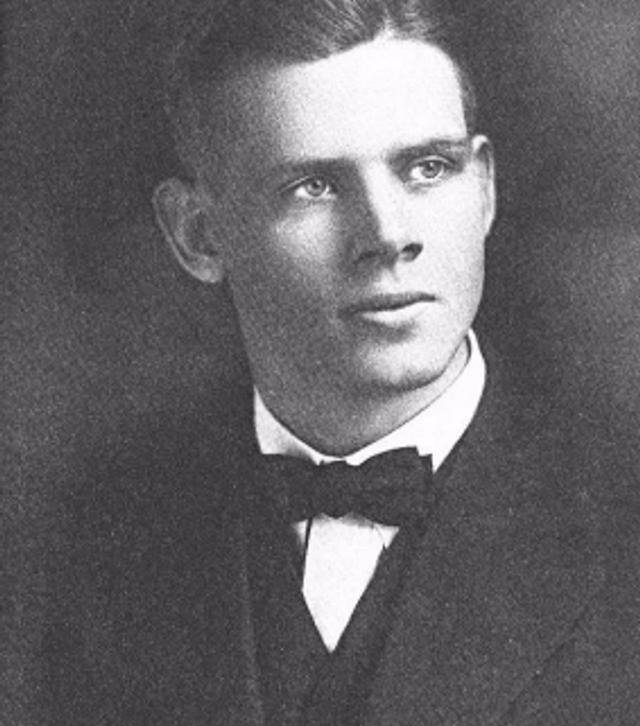
📖 Biography
From Norway to Northwest Shanxi
Peter Torjesen (叶永青) was born on 28 November 1892 in Kristiansand, a port city in southern Norway; his father was a chimney sweep. As a young man he received a call to mission and applied to go to China with the Norwegian China Mission, which had been founded as a result of Hudson Taylor's visit to Norway. In 1918 he left Norway, traveling via the United States, where he was ordained by the Evangelical Free Church in Brooklyn. After arriving in China he entered the China Inland Mission's language school, and from then on served all his life within the China Inland Mission's framework. In November 1921 he reached Hequ County in the far northwest corner of Shanxi, a poor, hilly area on the east bank of the Yellow River, facing Shaanxi and Inner Mongolia across the river, isolated and frequently struck by drought and famine. He took the Chinese name Ye Yongqing (叶永青), meaning "ever-green leaf," expressing his resolve to stay for good.
Rooted in Hequ
For the next eighteen years he hardly ever left this land. In January 1923 he married Valborg (Valborg Torjesen) in Lanxian. Under the China Inland Mission's rules, a missionary's wife was likewise a full-time worker, and the couple carried the work in Hequ together; their four children were born and grew up in China. Alongside preaching, they dealt with the most practical needs: disease, famine, poverty and illiteracy. Northwest Shanxi was then one of the poorest regions of China, and the great drought of the late 1920s and the famine that followed led him to put a great deal of energy into relief. To the people of Hequ, this Norwegian was not a passing foreigner but a neighbor who had lived among them for eighteen years.
A Refuge amid the War
In 1937 the War of Resistance against Japan broke out, and Shanxi became one of the main battlefields. Japanese forces advanced into northwest Shanxi, Hequ was bombed repeatedly, and refugees poured into the town. Peter Torjesen opened the church, the school and his own home, sheltering as many as a thousand refugees, and dug an air-raid shelter under the church that could hold a hundred people. During air raids they routinely laid the Norwegian flag flat on the ground in the courtyard. Norway was a neutral country, and for years this flag had served as an effective marker. They did not know that the war in Europe had already changed everything, and that this flag would soon no longer be a protection.
Killed in the Bombing
On 14 December 1939 Japanese aircraft raided Hequ and dropped more than two hundred and fifty bombs. One of them made a direct hit on the small house where the Torjesen family lived. The house collapsed, a beam struck him on the head, and he was killed instantly, only forty-seven years old. His wife and children witnessed it all. He was buried in Hequ, and local people came of their own accord to his funeral.
A Name on a Stone
Peter Torjesen's story was not forgotten when the war ended. In 1988 officials of Hequ County notified his family that he had been placed on the county's list of "People's Martyrs," and proposed erecting a memorial stone for him on the fiftieth anniversary of his death. In August 1990 a marble stone was unveiled in Hequ, with his life story engraved on it in gold characters; three generations of the Torjesen family attended. For a foreign missionary to receive such posthumous recognition is uncommon in China. In 1993 his grandson Finn Torjesen moved to Taiyuan and helped found the organization Evergreen (常青), continuing the family's service in China. Among the many missionaries in this database, his life is not distinguished by writings, Bible translation or founding institutions: he simply lived for eighteen years in a remote county town, and then died there for its people.