💬 Famous Quotes
📋 Basic Information
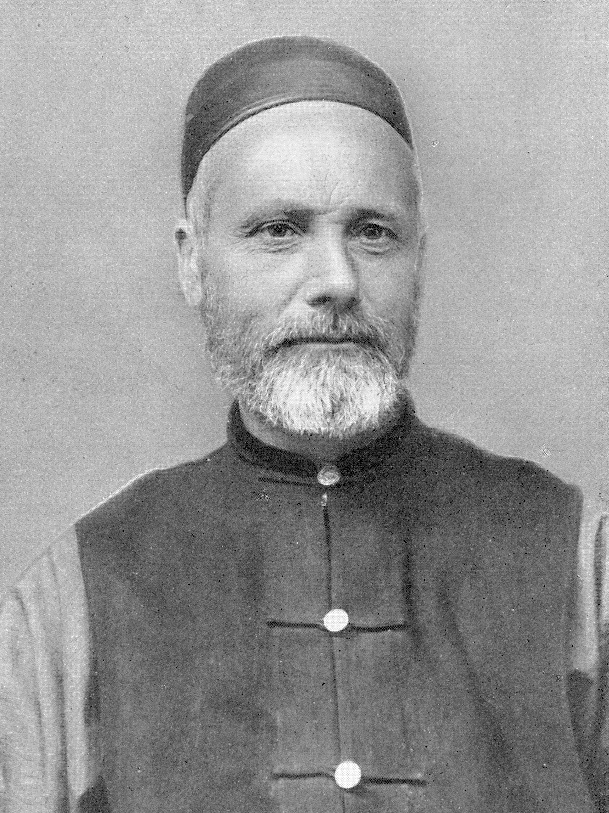
📖 Biography
Early Years and Call
James Gilmour (季雅各, also rendered 景雅各) was born on 12 June 1843 at Cathkin, Lanarkshire, Scotland, into a family that had held the Calvinist faith for generations and belonged to the Congregational church. He entered the University of Glasgow in 1862 and took his BA in 1867 and his MA the following year. His academic record was excellent, yet his temperament was very plain; he was not sociable and liked to go his own way. He then trained further at Cheshunt College and at the missionary institution at Highgate. While a student he read that the mission to the Mongols had long been interrupted: Edward Stallybrass and others of the London Missionary Society had worked among the Buryat Mongols at Selenginsk in Siberia from 1818, until in 1840 the work was suppressed by the Orthodox Holy Synod under the Russian tsars, and for the thirty years since no one had taken it up. These vast grasslands became a burden on his heart. In February 1870 he was ordained, and on 18 May he arrived in Beijing, aged twenty-six, with a single task: to reopen the mission to the Mongols.
A Lone Traveller on the Grasslands
Gilmour did not settle himself in a treaty port. He learned Mongolian, wore Mongolian robes, travelled with caravans and herders, lived in yurts, ate cheese and roasted millet, and spent nights in the open wrapped in felt blankets. Year after year he went back and forth between Beijing and the grasslands, going north to the pastoral regions in summer and returning to Beijing in winter to put things in order and rest. He also practised medicine and gave out medicines; on the grasslands, where doctors and medicines were scarce, this was often the only way to open the door of a felt tent. He wrote up his journeys and observations in diaries and letters sent home to Britain, which were later collected into the book Among the Mongols. Written in a plain, vivid style, it was widely popular in Britain and America and came to be regarded as a classic of mission literature.
Fourteen Years of Waiting
Yet the fruit came extremely slowly. For thirteen full years after he came to China he did not see a single person converted. Only in March 1884 did the first Mongol turn to Christ, nearly fourteen years after his arrival in China, and even this man's baptism was performed by a missionary of the American Board. Such a long blank would be enough to crush anyone, and in his diary he admitted to loneliness and self-doubt. He was alone in the field for long stretches; his wife Emily (Emily Prankard) died of illness in Beijing in September 1885, the two older children were sent back to Britain the following year, and the youngest son had died long before, so from then on he was even more alone. But he never left.
Turning to Eastern Mongolia
In his later years Gilmour shifted his focus from the depths of the nomadic grasslands to the farming districts of eastern Inner Mongolia: the settled villages around Chaoyang and Dachengzi. With a stable population, the work could take root; believers gradually increased, and a church began to take shape. He still kept to a very simple life, spending most of his salary on medicines and relief, and for years dressed in plain cloth and ate coarse food.
At Rest in Tianjin
In 1891, while attending a missionary conference in Tianjin, Gilmour contracted typhus and died on 21 May, three weeks short of his forty-eighth birthday. The fruit of his life was very small; measured by numbers, it could hardly be called a "success." But his twenty-one years of faithful, unwavering waiting, together with the book that let Western readers see the daily life of Mongol herders for the first time, led later generations to call him the "Apostle of Mongolia." After his death, Richard Lovett, book editor of the Religious Tract Society, compiled More About the Mongols (1893) from his diaries and letters. In a mission history that prizes results, he represents another kind of witness: faithfulness does not equal harvest, and the waiting is itself an answer.