💬 Famous Quotes
📋 Basic Information
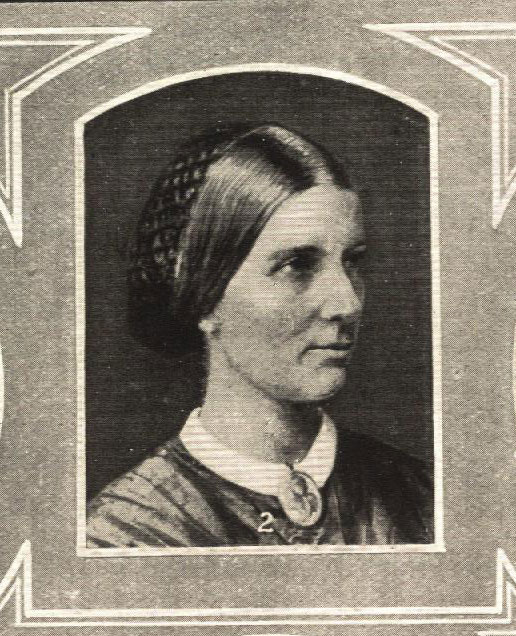
📖 Biography
Born into a Missionary Family
Maria Jane Dyer (玛莉亚·戴尔) was born in Malacca on January 16, 1837. Her father, Samuel Dyer (台约尔), was a London Missionary Society missionary stationed in Southeast Asia, known for casting Chinese movable type and promoting literacy work among the Chinese; her mother, Maria Tarn, also came from a missionary family. Maria grew up among the Chinese community and spoke both Chinese and Malay. Her childhood, however, was not settled: in 1843 her father died in Macau, and a few years later her mother also died, after which she and her siblings were sent back to England to be raised by relatives. Being orphaned made her mature early, and left her with an unspoken sense of responsibility for her parents' unfinished work in China.
Return to China
In 1853, at only sixteen, Maria returned to China with her elder sister to work at the girls' school run by Mary Ann Aldersey (艾迪绥) in Ningbo, one of the earliest girls' schools in China. She taught, learned the local dialect and visited women, and soon became a capable young worker in the Ningbo missionary community. It was in Ningbo that she met Hudson Taylor (戴德生), who had just become independent of the Chinese Evangelisation Society, lived in straitened circumstances and had an uncertain future.
Marriage and Shared Ministry
The marriage met strong opposition at first. Miss Aldersey considered that Taylor, with no mission society behind him and no fixed income, was not good enough for Maria, and her guardians in England did not approve either. Maria, however, made her own judgment and insisted on waiting. On January 20, 1858, the two were married in Ningbo. For the next twelve years she was not only wife and mother but also Taylor's most irreplaceable co-worker in ministry: fluent in the Ningbo dialect and Mandarin, she took part in revising manuscripts and in correspondence. After the China Inland Mission was founded in 1865 and the Lammermuir brought the first party of workers to China in 1866, the language training of new missionaries, their adjustment to the climate and even the settling of everyday disputes were largely in her hands. When Taylor repeatedly broke down from overwork and illness, it was she who kept the young mission running from day to day. Later generations called her "the mother of the China Inland Mission," and the title was not undeserved.
Watching Through Hardship
Their years were far from easy. During the Yangzhou riot of 1868, when a mob besieged the missionaries' house, Maria escaped in panic by jumping from an upper floor and was badly injured. Over twelve years she bore nine children, five of whom died young; only four lived to adulthood. This was common in missionary families of the time, but its being common did not lessen the pain. In her letters she seldom complained; she mostly recorded news of co-workers and small matters about the children, in a plain tone.
At Rest in Zhenjiang
On July 7, 1870, Maria gave birth in Zhenjiang to her youngest son, Noel, who died thirteen days after birth; she herself contracted cholera the same month and died on July 23, aged only thirty-three. She was buried in the missionary cemetery in Zhenjiang. Half a year earlier her five-year-old son Samuel had died. In his deep grief Hudson Taylor wrote: "The Lord has taken her, but the Lord himself remains." Almost all of her short life was given to China: born into a missionary family, raised among the Chinese, and finally buried in Chinese soil. Of the China Inland Mission's later work, which spread across the eighteen provinces of inland China, half of the original foundation was laid with her support.