💬 Famous Quotes
📋 Basic Information
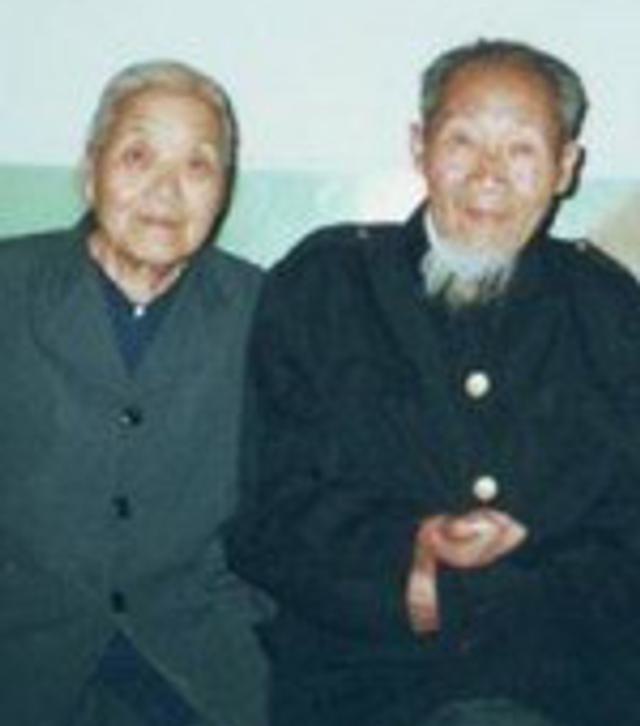
📖 Biography
Vision and a New Name
Zhao Maijia, originally named Zhao Chongyi (赵崇义), was born in 1919 in Linxian (林县), Henan Province. As a child he moved with his parents, fleeing famine, to Shizezhuang (市泽庄) in Tunliu County, Changzhi, Shanxi, and thereafter regarded Shanxi as his home. After the War of Resistance against Japan broke out, he joined an Eighth Route Army anti-Japanese dare-to-die unit and fought as a guerrilla in the Taihang Mountains, and later studied at the Anti-Japanese Military and Political University. During a Japanese mopping-up campaign a leg wound separated him from his unit, and he fell into the hands of Nationalist troops, who held him in Luoyang, Xi'an and elsewhere; he was released in May 1943, and during this time he returned to his faith. In 1944 he entered the Northwest Bible Institute (西北圣经学院) in Fengxiang, Shaanxi, to study theology. In November 1942 the institute's president, Pastor Mark Ma (马可), had founded the Chinese Christian Preach-the-Gospel-Everywhere Band (中国基督徒遍传福音团), setting out a vision unheard of in the Chinese church of the time: the gospel had spread eastward from Jerusalem across Asia, and now Chinese believers should take up the baton and carry it westward through Shaanxi, Gansu, Ningxia, Qinghai and Xinjiang, back to Jerusalem. The Chinese church itself was then caught in war and poverty, and sending missionaries seemed almost unthinkable; yet these young people took it seriously. While at the institute, Zhao Chongyi changed his name to "Maijia" (Mecca), taking the name of Islam's holy city to mark his resolve to spend his life preaching the gospel to Muslims.
Alone to the Western Regions
In the spring of 1948, Zhao Maijia set out alone. He traveled through Zhangye, Jiuquan and Dunhuang and beyond the pass, crossed Hami and Turpan, and then went south along the southern foothills of the Tianshan. Months later he reached Shule, in what is now Shule County in the Kashgar region, a Uyghur area in the heart of southern Xinjiang. There he rented a house for meetings, and the following year established a church. Western missionaries had once set up stations around Kashgar, but most had withdrawn during the upheavals of the 1930s; before him, no Han Chinese missionary had gone to southern Xinjiang to preach the gospel. He faced not only a gulf of faith but also a wholly unfamiliar language and customs, the poverty of the frontier, an unstable political situation, and the double estrangement of being a "Han from the interior" in that place.
Handing On and Moving West
In 1949, another group holding the same "Back to Jerusalem" vision, the Northwest Spiritual Work Band (西北灵工团), which grew out of the Jesus Family (耶稣家庭) in Shandong and was led by Zhang Guquan (张谷泉) and others, reached Xinjiang after a journey of thousands of miles on foot. Zhao Maijia handed over the Shule church he had founded to them, and with co-workers including Dai Yanzhong (戴彦中) and Lude (路得) he continued westward, establishing churches in the Yarkant (Shache) and Hotan areas. The two groups were independent of each other but shared the same vision; together they formed the wave of Chinese mission to the northwest in the 1940s.
Remaining Through the Storm
After 1949 the political situation changed drastically, and the mission workers in the northwest were the first to be affected. Zhang Guquan, Zhao Ximen (赵西门), Liu Deming (刘德明) and others of the Northwest Spiritual Work Band were arrested and imprisoned one after another from 1951, and some died in prison. Because of his background in the Eighth Route Army and the Anti-Japanese Military and Political University (抗大), Zhao Maijia was not punished after a public security investigation and was able to remain in Xinjiang. During the Cultural Revolution, however, he was branded in Yarkant a "spy," "secret agent," "counter-revolutionary" and "deserter," and suffered harsh struggle sessions and persecution. When the storm had passed he did not leave; he returned to Yarkant to work as an accountant, and after retiring in 1987 settled in Kashgar. He served in Xinjiang for nearly sixty years in all, and died on 7 March 2007.
A Forerunner of Chinese Missions
The significance of Zhao Maijia and the northwest missionaries of his generation lies in overturning a long-held impression: China was not only a "mission field" but could also be a "sending church." This history has long been absent from the narrative of Western mission history; yet it was these Chinese missionaries, with no mission agency behind them, no steady support, and not even many written records left behind, who were the first to answer the call of world mission with action. It is recorded that in his later years, after a stroke, whenever he heard the vision of the Preach-the-Gospel-Everywhere Band or the hymns of those days, he would still be moved to tears; it was a charge he had received in his twenties and fulfilled with his whole life.