💬 Famous Quotes
📋 Basic Information
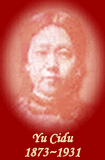
📖 Biography
Background and Calling
Dora Yu was born in 1873 in Hangzhou, Zhejiang, into a Christian family; her father, Yu Weichuan (余渭川), was a pastor of the American Presbyterian Church. She received a Western-style education from childhood, and in 1896 graduated from the Soochow (Suzhou) Medical School (Boxi), one of its first women graduates, after which she stayed on to serve at its women's and children's hospital (Mary Black Hospital), making her one of the first women in China to receive systematic medical training.
Sent to Korea
In October 1897 she went with Mrs. Josephine P. Campbell of the Woman's Board of Foreign Missions of the Methodist Episcopal Church, South, to Seoul (Hanseong), Korea, practising medicine and preaching. She was one of China's earliest cross-cultural missionaries. She served in Korea for six years and returned to China in 1903, worn out in body and mind.
Independent Revival Ministry
After returning she was no longer bound to any mission board, and travelled as an independent evangelist through Jiangsu, Zhejiang, Fujian and Guangdong, preaching mainly at revival meetings and on the filling of the Holy Spirit. From 1903 onward she preached on the road for many years and was hailed as “the foremost of Chinese women preachers.” At revival meetings in Fuzhou in 1920, Watchman Nee, then only 17 years old, was moved by her preaching, born again and turned to the Lord, and he went straight on to study at the Bible Study and Prayer House she ran in Shanghai.
Founding the Bible Study and Prayer House
In 1909 she founded the Bible Study and Prayer House in Shanghai; in 1916 it moved into new buildings at Jiangwan and was officially named the Jiangwan Bible School, a pioneer of independently run theological education for Chinese women. She held firmly to the principle of “living by faith”: she never made public appeals for money, and the work's funds depended entirely on prayer and God's promises. She wrote devotional booklets such as Zhu Bi Kuai Lai (The Lord Is Coming Soon) and Desheng zhi Dao (The Way of Victory), and edited Chajing Huikan (Bible Study Collection). She died of illness in Shanghai in 1931 and was buried in a Shanghai cemetery. Her ministry directly influenced Watchman Nee and the brothers Leland Wang (王载) and Wang Zhi (王峙); at the 1925 revival meetings in Shanghai where she worked together with Leland Wang, Andrew Gih (计志文) and other young people dedicated their lives to preaching.
📚 Major Works
📚 References & Sources
- Wikipedia: Dora Yu
- UMC: Dora Yu
- KCI article on Chinese female Christians in Korea