💬 Famous Quotes
📋 Basic Information
📖 Biography
Entering the Congregation and Coming to China
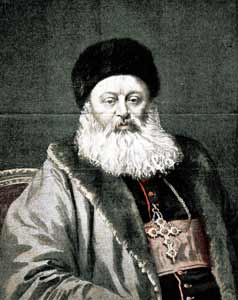
Pierre-Marie Favier was born in 1837 into a farming family at Marsannay-la-Côte in the department of Côte-d’Or, France. In 1858 he joined the Congregation of the Mission (the Lazarists), was ordained priest in 1861, and in 1862 arrived in Beijing, assigned to the Vicariate Apostolic of Northern Zhili. He knew Mandarin and Manchu well and was active in Beijing's Catholic community for more than thirty years.
The Beitang
From 1864, at Xishiku (Canchikou), he assisted Bishop Mouly (孟振生) in running the affairs of the Beitang, and for many years he managed the Beitang printing house, which published a large number of Chinese catechisms, liturgical books and Chinese dictionaries. He himself compiled Péking, Histoire et description (1897), one of the most important French works through which late-19th-century Europe learned about the city of Beijing and its Catholic history.
Consecration and Siege
In 1897 he was consecrated coadjutor to the Lazarist Vicar Apostolic of Northern Zhili, and in 1899 he succeeded as Vicar Apostolic, residing at the Beitang in Beijing (the Xishiku Church; the old Canchikou church had been moved and rebuilt at Xishiku in 1887). When the Boxer movement broke out in 1900, from June the Beitang was besieged by the Boxers and by Qing troops under Prince Duan. Favier and the French naval lieutenant Paul Henry, with forty French and Italian sailors and more than 700 Chinese and foreign Catholics, held the church walls for 56 days, organising the digging of wells, the rationing of food and the care of the wounded, until the Allied forces entered Beijing in August and lifted the siege. His siege diary (edited by Joseph Freri and published in English in 1901) is one of the most important eyewitness records of the Boxer movement.
Postwar Reconstruction
After the crisis he directed the rebuilding of the Beitang and the distribution of the indemnity, on an unprecedented scale. He died of illness in 1905 at his residence at the Beitang in Beijing and was buried in the Beitang Cathedral.