💬 Famous Quotes
📋 Basic Information
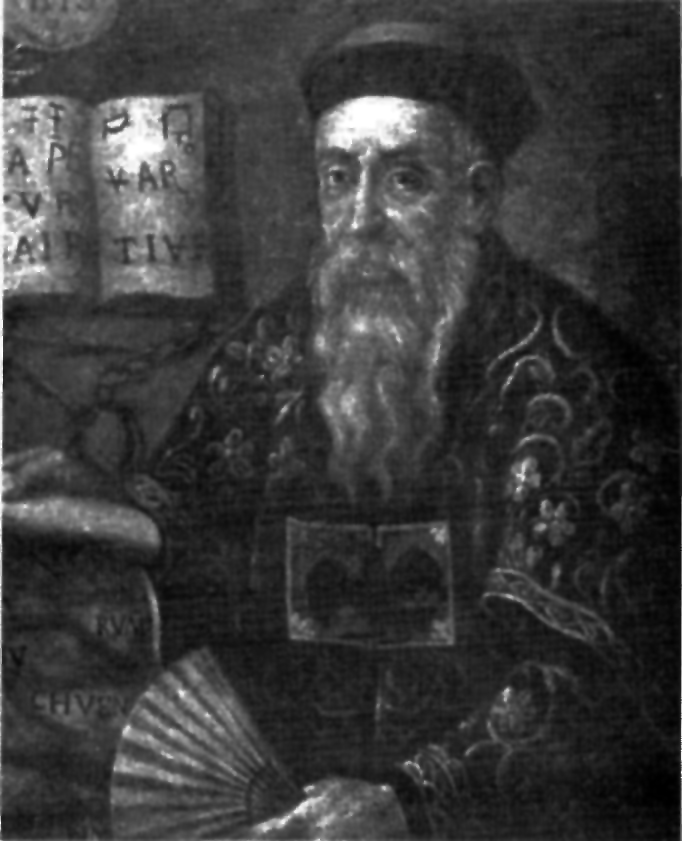
📖 Biography
Entering the Society and Coming to China
Lodovico Buglio was born in 1606 in Mineo, Sicily, Italy. He entered the Society of Jesus in 1622, was ordained priest in 1635, and in 1637 sailed from Lisbon for China, where he served first in Jiangnan, Fujian and Huguang. In 1640 he entered Chengdu in Sichuan, the first European to do so. Invited by Liu Yuliang (刘宇亮), a former Grand Secretary from Sichuan, he preached to the gentry and common people of Sichuan, built a church, and established the early Catholic community of Sichuan.
Captive in Sichuan
In 1644 Zhang Xianzhong led his Great Xi army into Chengdu. Buglio and his fellow Jesuit Gabriel de Magalhães (安文思) were for a time summoned into Zhang Xianzhong's Great Xi regime, given the title "Master of Heavenly Learning to the State" (天学国师), and took part in technical work on revising the calendar and casting bronze cannon. In 1647 Qing troops entered Sichuan and Zhang Xianzhong was defeated and killed; Buglio and Magalhães were taken into custody by the Qing general Hooge (豪格) and brought north to the capital, and from then on they lived for many years in Beijing.
Service in Beijing
From 1648 he lived in Beijing, working first alongside Johann Adam Schall von Bell (汤若望) and later alongside Ferdinand Verbiest (南怀仁), taking part in calendar revision and the translation of Western learning. Together with Magalhães he directed the building of the Dongtang (East Church, St Joseph’s Church), one of the four great Catholic churches of Beijing. He wrote a number of theological and liturgical works in Chinese, including Budeyi Bian [A Rebuttal of Budeyi], Tianzhu Jiaoyao [Essentials of the Catholic Faith] and Sheng Ruose Zhuan [Life of St Joseph], and translated liturgical books such as the Roman Missal (1670), the Breviary (1674) and the Ritual (1675), as well as several volumes of abridgements of the theology of St Thomas Aquinas, an early effort to introduce Scholastic Theology systematically to Chinese readers.
Theological Writing and Translation
Together with Ferdinand Verbiest, Tomás Pereira (徐日升), Gabriel de Magalhães and others, he helped sustain the trust the Kangxi court placed in the Jesuits in its early years, and he was one of the most prolific Jesuit writers of Chinese theology in 17th-century China. He died of illness in Beijing in 1682 and was buried in the Zhalan Cemetery.