
The Canons of Dort, formally "The Decision of the Synod of Dort on the Five Main Points of Doctrine in Dispute in the Netherlands" and also known as the Five Articles against the Remonstrants, set out the doctrine adopted by the Synod of Dort in 1618–1619. Although it was a national synod of the Dutch Reformed Church, the gathering was genuinely international: sixty-two delegates from across the Netherlands were joined by twenty-seven delegates from eight other countries.
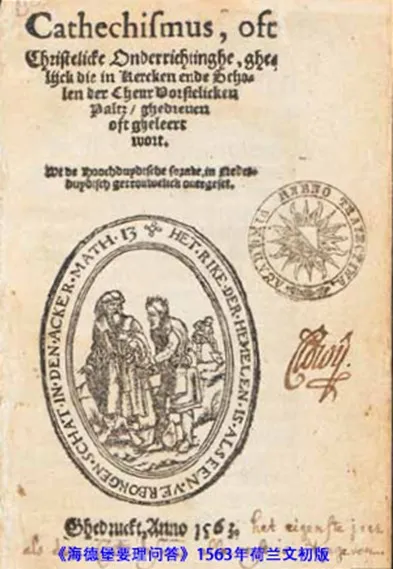
The Heidelberg Catechism was written in Heidelberg in 1563 at the request of Elector Frederick III (r. 1559–1576), ruler of the Palatinate, the most influential German territory of its day. This devout prince commissioned Zacharias Ursinus, then just 28 and professor of theology at the University of Heidelberg, and Caspar Olevianus, his 26-year-old court preacher, to prepare a catechism for instructing the young and for guiding pastors and teachers. The whole theological faculty was consulted in its preparation, and it was adopted by a synod in Heidelberg the same year.

The Belgic Confession, the confession of faith of the Dutch Reformed churches, was written in 1561 and is sometimes called the Walloon Confession. Its author, Guido de Brès, wrote it in defence of the persecuted Reformed churches of the Low Countries. It was translated from French into Dutch in 1562, approved by a synod at Antwerp in 1566, and adopted by the Synod of Dort in 1618–1619. Together with the Heidelberg Catechism and the Canons of Dort it forms the doctrinal basis of the Dutch Reformed tradition, and it is still a confessional standard for Reformed churches in North America today.